
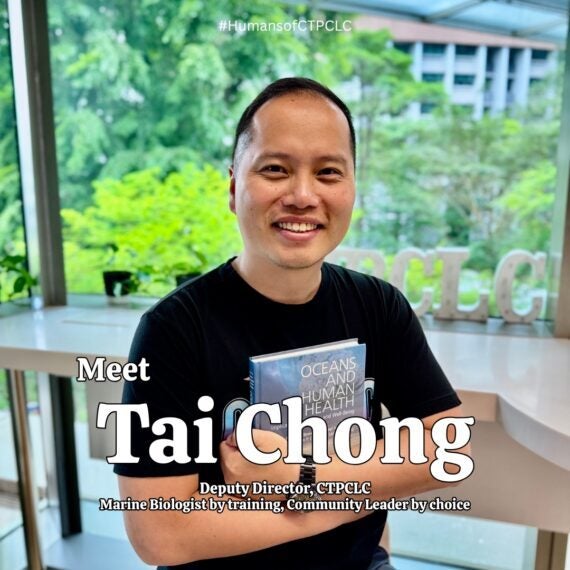
Meet Tai Chong
Dr Toh Tai Chong wears many hats. He is a marine biologist by training, a community leader by choice, and a senior lecturer with appointments across two departments. Across these different roles runs a common thread: a commitment to understand how people and communities come together to care for the places they inhabit.
Much of his teaching reflects this journey. Since joining the College of Alice and Peter Tan in 2017, he has taught courses that explore environmental issues through both scientific and social lenses. He also helped launch a community internship programme in 2019, driven by the belief that universities could do more to support community organisations beyond research.
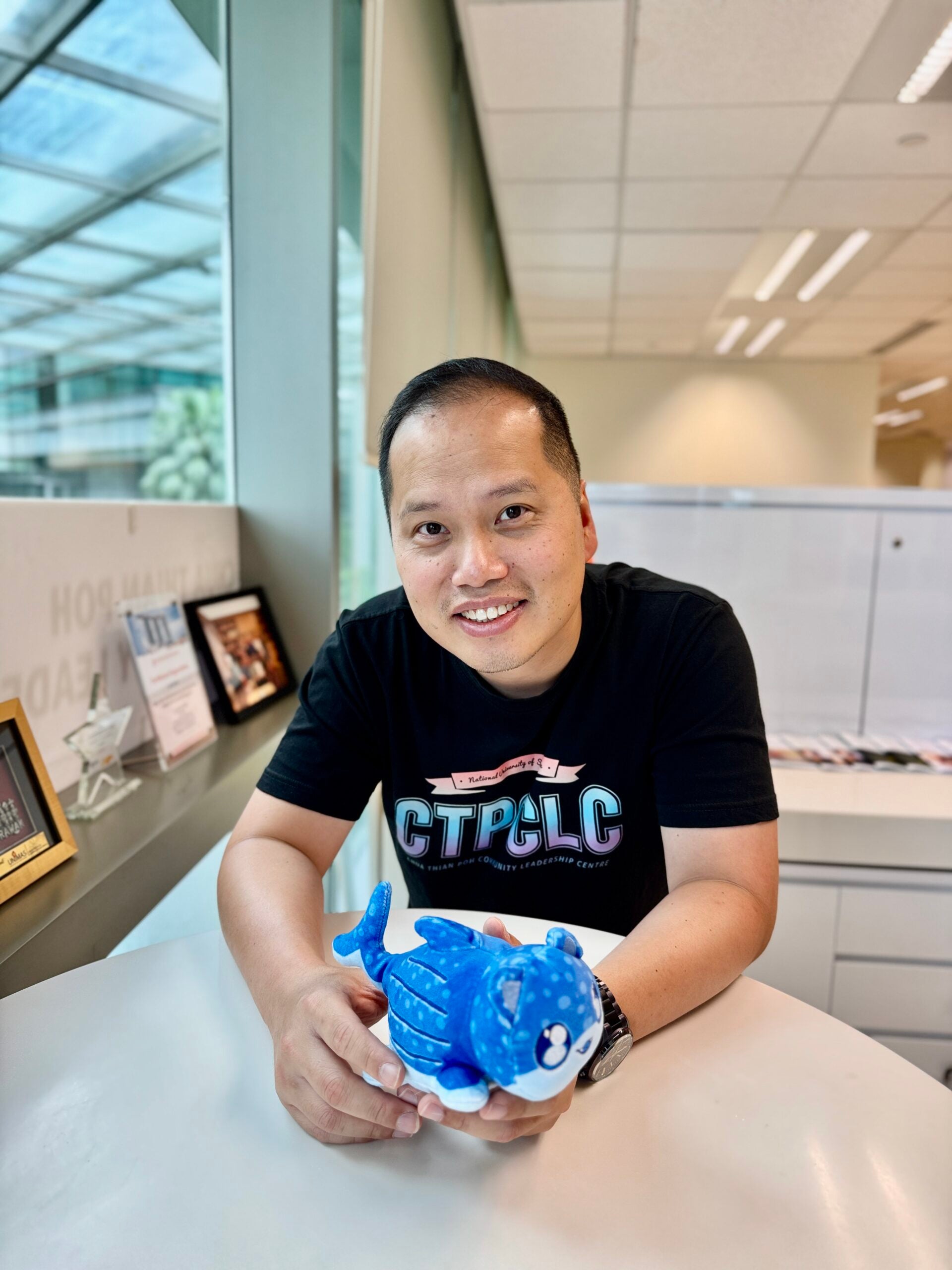
Around the same time, he joined the Chua Thian Poh Community Leadership Centre (CTPCLC) on a joint appointment. Recently, he was appointed Deputy Director at CTPCLC where his work focuses on curriculum development, supporting instructors, and strengthening relationships with alumni working across the social impact sector.
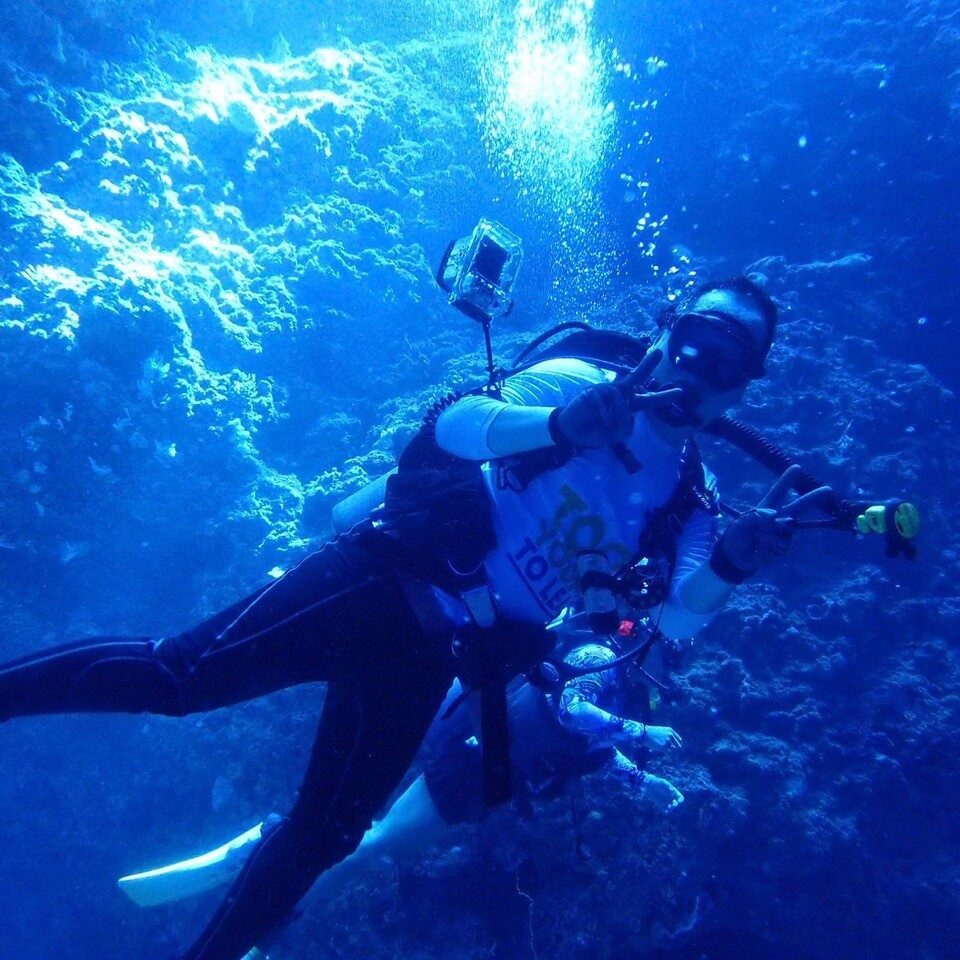
The roots of this work stretch back much further. As an undergraduate studying biological sciences in 2005, Tai Chong discovered diving and found himself captivated by the idea of becoming a marine biologist.
"I thought it would be nice someday to be a marine biologist because you can just hang out by the sea," he recalls with a laugh. "That's a nice work environment."
His undergraduate training, however, was largely laboratory-based and far removed from the field. Looking for something that would bring him closer to the outdoors, he pursued a PhD. As he tells it, he approached his future supervisor with a simple request: "Please accept me. I will do anything that you give me."
The response was equally straightforward. "Okay, can. You will do this because we have a grant on it."
As it happened, the project was coral reef restoration. During his PhD, Tai Chong worked across Singapore and the Philippines, studying coral reproduction and exploring how scientific knowledge could support conservation efforts. Yet one of the most important lessons he learned had less to do with corals than with people.
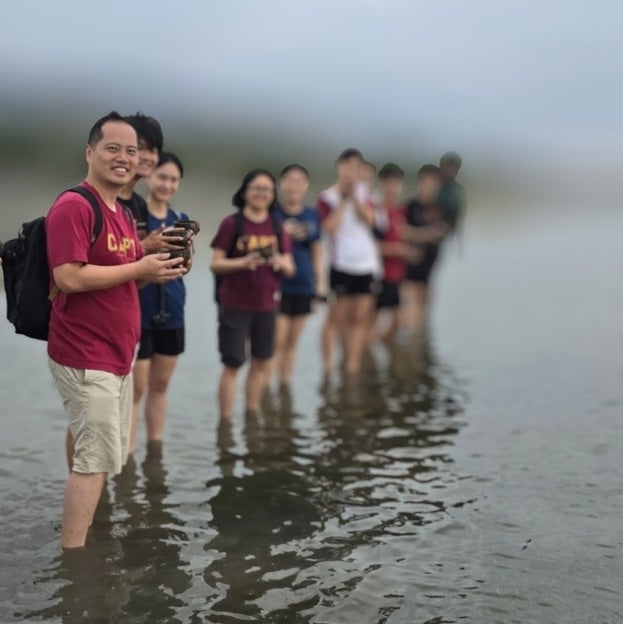
"As much as I wanted to be a marine biologist, if I wanted to be effective in the field, I had to work with people," he says. "Honestly, corals are a lot easier to work with than people. But if I wanted to make an impact, that's where I need to start interacting with and understanding different communities."
That realisation fundamentally reshaped how he thought about conservation.
"There are so many tools around, but not all these tools are suitable for that particular space," he explains. "Because of biological systems, but even more so because of the people behind it."
Scientists, he notes, often arrive with expertise and technology. But they rarely stay forever.
"As scientists, we go down, we work with them for a couple of months, then we leave. Eventually, the stewardship and the custodians are the local community."
As a result, conservation work must begin not with solutions, but with listening.
"We need to bring them in and see where they are at and tailor the approaches," he says. "There could be super useful technology, but if they can't implement it, then it's a big challenge."
To explain this, Tai Chong turns to a simple analogy.
"I always see restoration as a toolkit," he says. "Just like how you wouldn't use a spanner for something that requires a screwdriver. If you use the wrong tool, you mess everything up."
The same principle applies to communities. Effective conservation requires understanding local skills, capacities, and priorities before deciding how best to contribute.
This philosophy continues to shape his pro bono work with the NGO he co-founded Our Singapore Reefs and community partners across the region.
"You have to journey with them," he reflects. "You have to know when to step forward and when to step backwards."
For Tai Chong, teaching and community engagement are deeply interconnected. His academic training provides frameworks and tools for understanding complex problems, while community work offers opportunities to test those ideas against lived realities.
"You see how things work in reality," he says. "You test these frameworks from a practitioner's point of view and sometimes realise the framework is not sufficient. Maybe something more needs to be done."
Community organisations have also played an important role in shaping students' learning experiences through guest lectures, internships, and partnerships. Tai Chong believes that if universities benefit from the expertise and generosity of community partners, they also have a responsibility to contribute meaningfully in return.
"I always believe that we are an ecosystem," he says. "Whatever and wherever you are, you can contribute. When we synergise efforts, it helps the wider community. It may not always be immediately tangible, but it matters."
His advice to students and colleagues who hope to make a meaningful impact is simple.
"Start off by volunteering," he says. "Go there with an open mind and try to understand where the community is coming from."
Just as importantly, he cautions against becoming overly focused on outcomes.
"Don't be pressured to deliver outcomes," he says. "It's really about respecting what the community wants and what they think is useful for them. With that lens, it gives both parties some space to breathe—and it's okay to fail."