


A Diasporic Community in the City: Sensing Singapore’s “Little Myanmar”
by Dr Kevin S.Y. Tan, Ms Kuah Ting Ting and Sophia Chye Shu Fei (FASS '26)
On a typical Sunday afternoon, the first thing that strikes any visitor as one alights City Hall MRT Station is the massive crowd that also gets off there. Dozens of people head to the escalators as one might be bewildered as to what is happening. Akin to crowds heading towards a rock concert or even a major sporting event, perhaps the first thing that strikes anyone would be the language being spoken among a majority of persons in the crowd – Burmese. Taking a closer look, one would begin to notice some of the slightly darker features of persons along with occasional modes of dress that are unmistakably Indochinese even for anyone unfamiliar with Myanmar’s society. And as one gets to the top of the train stations escalators and moves past the electronic turnstiles, you join an even larger crowd that has reduced mobility to a plodding pace as the MRT station’s service personnel do their best to usher the crowd in an orderly and safe manner. The temporary exodus-like human flow culminates as you reach one of the main exit points of the MRT station next to St Andrew’s Cathedral. Emerging on the surface at the junction of Stamford Road and North Bridge Road, the crowd disperses as quickly as it came together, not so much to disappear, but to cover the surrounding areas that are teeming with other smaller crowds, either resting together in public spaces such as grass patches or covered walkways with seats. You also catch sight of groups of Myanmar persons cheerfully in conversation with each other as they move together, particularly to a specific ageing mall in the area just across from where you emerge. Sunday’s warm afternoon sun greets your face as you pause, taking in the sights and sounds of the crowds hovering at the street level entrance of the ageing mall. Taking a closer look, you recognize it to be Peninsula Plaza, now dubbed Singapore’s “Little Myanmar”.
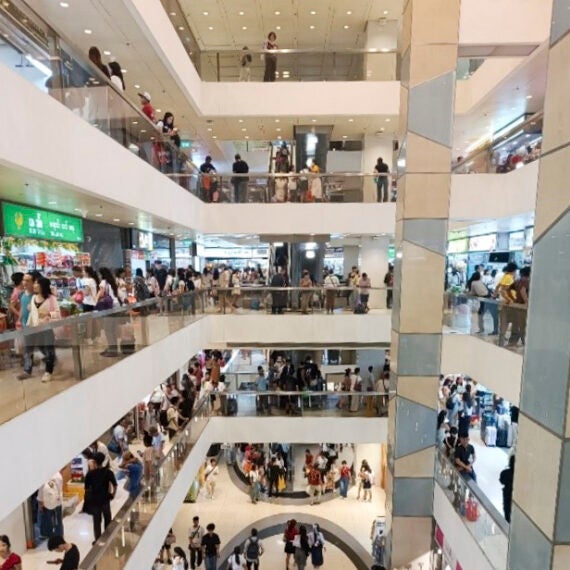
Within walking distance from City Hall MRT Station, the Capitol Cinema, Raffles City and Funan Mall are familiar weekend destinations for many Singaporeans. Located within the busy City Hall district, these malls attract crowds looking for food, shopping, entertainment or just a day’s respite from the past week. Yet, amid this bustling part of Singapore stands a building that some of us may have walked past without ever entering. Located at North Bridge Road, Peninsula Plaza is a 30-storey mixed-use development consisting of a retail podium and commercial offices. From the outside, it may appear to be just another ageing shopping centre from the 1970s. However, stepping inside on a Sunday will emerge a very different side of Singapore. The building has long been known as “Little Myanmar” because it serves as an important social and commercial enclave for Singapore’s Myanmar community, particularly Myanmar’s domestic and construction workers.
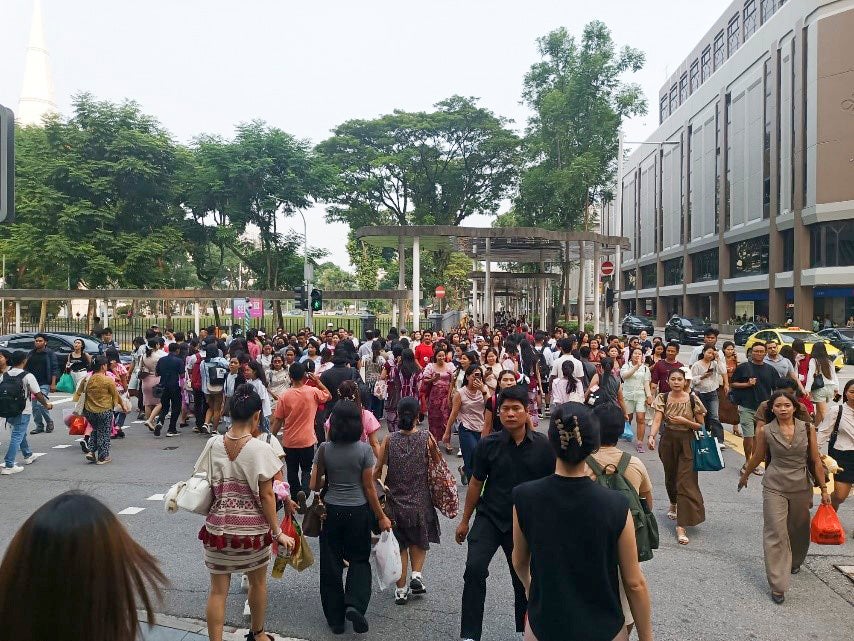
The origins of “Little Myanmar” can be traced to the increasing influx of Burmese transient migrant workers to Singapore across many industries. Due to a combination of internal political upheavals and economic challenges in recent years, Singapore has emerged as a popular destination in Southeast Asia for them to seek better prospects and a more sustainable livelihood. They can be found in various occupations such as domestic workers, retail, food & beverage, and even as skilled workers in the shipyards. At the time of writing, it is estimated that there are around 200, 000 Burmese persons in Singapore, making them one of the largest migrant populations. It is also useful to note that substantial numbers have also taken up citizenship in Singapore, making it their home and country.
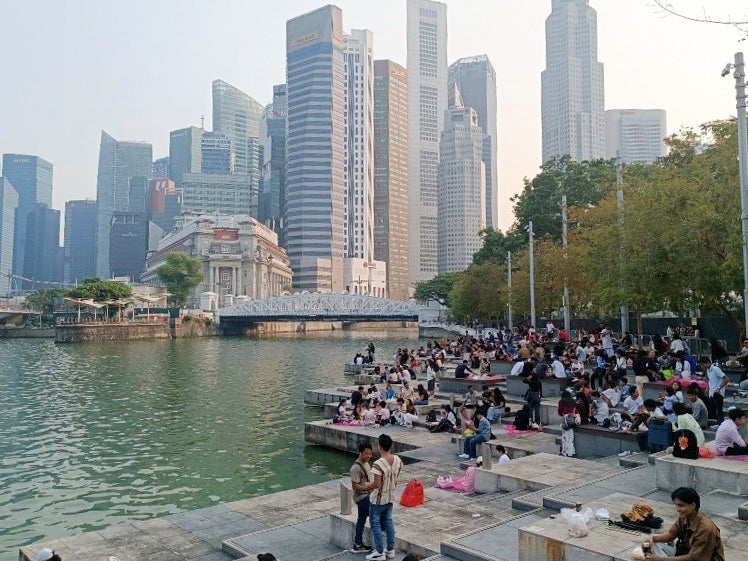
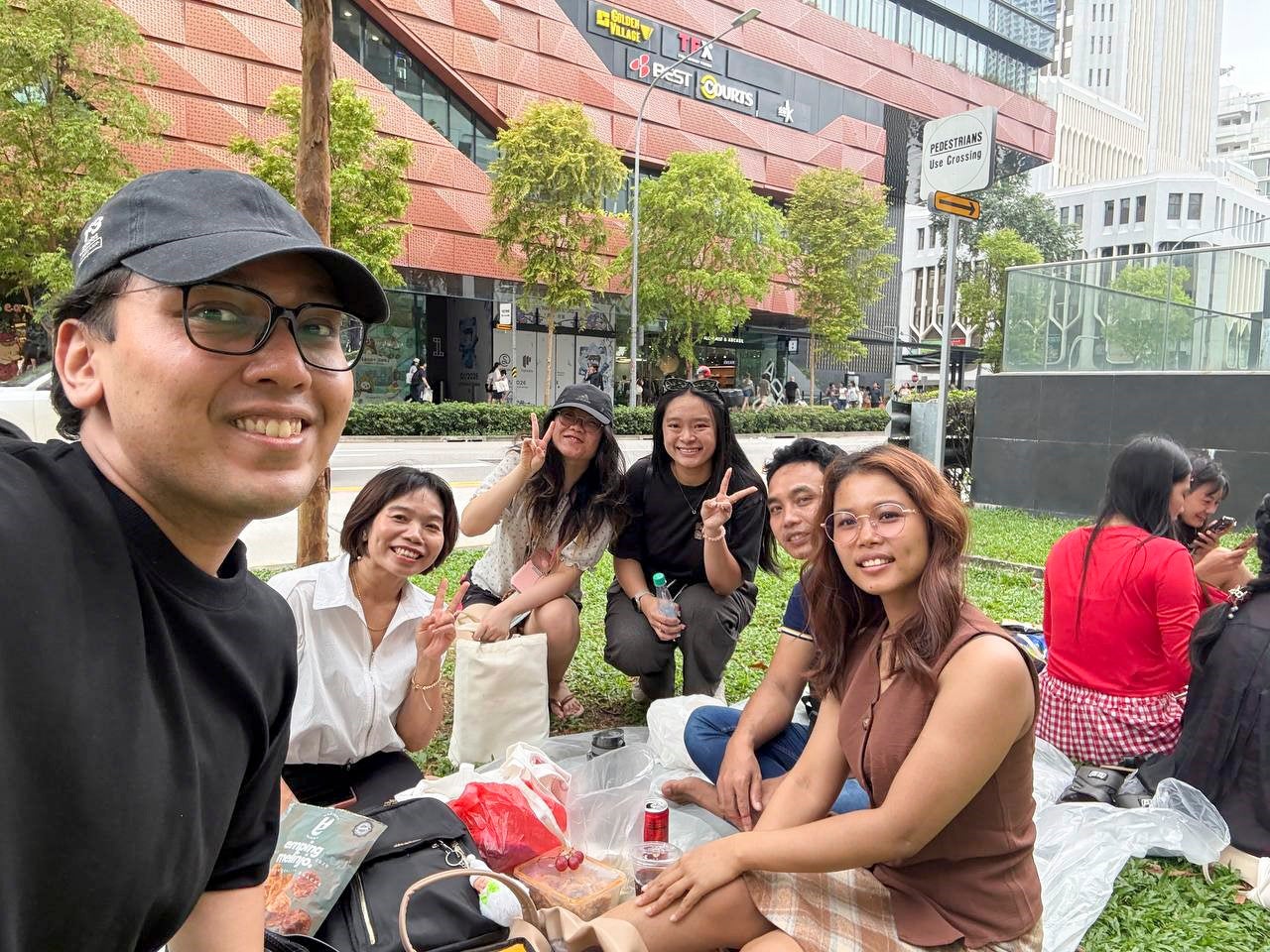
“Little Myanmar”, however, is no longer confined to Peninsula Plaza itself. On weekends, the community extends into the surrounding areas along North Bridge Road and Coleman Street, leading up to Fort Canning Park. Groups gather below the shelter beside St Andrew’s Cathedral, outside The Adelphi and even in informal spaces such as carparks and sheltered corners, many seated on groundsheets laid on sidewalks and grass patches. Across the Padang, numerous pockets of Burmese workers also occupy spaces along the Esplanade and Victoria Concert Hall. It is obvious that the diasporic character of the community has extended beyond the confines of the ageing shopping mall. Picnic mats are laid out, food is shared and conversations take place in familiar languages. Through these everyday practices, ordinary urban spaces are temporarily transformed into community spaces, which in turn have also evolved into periodic third spaces for them.
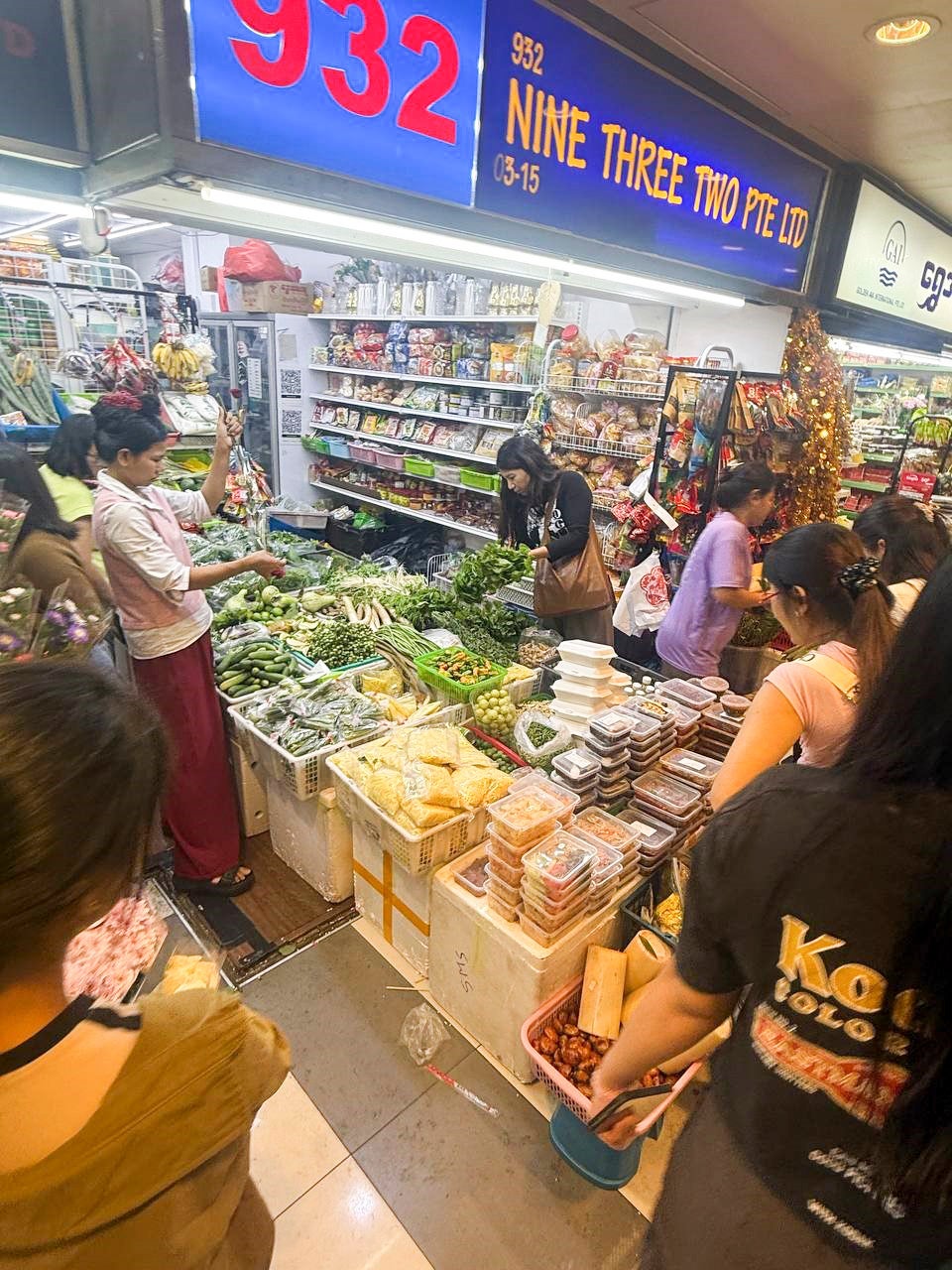
Inside Peninsula Plaza, each level supports different aspects of migrant life. From the basement to the upper retail floors, there are Myanmar restaurants, grocery stores, clothing shops, beauty salons and businesses selling prepaid phone cards. These shops provide more than products and services. They offer familiarity to people living far from home, some of whom may only return to Myanmar once every few years – this place is their “home away from home”, a place where cultural memory and the everyday merge into one. In other words, while the seeming public spaces of an ageing mall like Peninsula Plaza may appear to be merely functional and transactional for certain people, it can take on far deeper meanings for the Burmese, providing a sense of comfort through the presence of language, food, clothing and even scents.

One of the busiest services we observed was parcel delivery. These businesses were not always prominently located near the escalators. Some were tucked away in quieter corners, but slowing down allowed us to notice the steady stream of customers carrying bags and boxes. Sending a one-kilogram parcel to Myanmar cost around $15, while larger boxes could cost as much as $65. The packages contained clothes, personal items and gifts for family members. Some workers told us that the clothes they were sending home had been given to them by their employers, offering a small glimpse into the relationships that may exist between workers and the households they support.
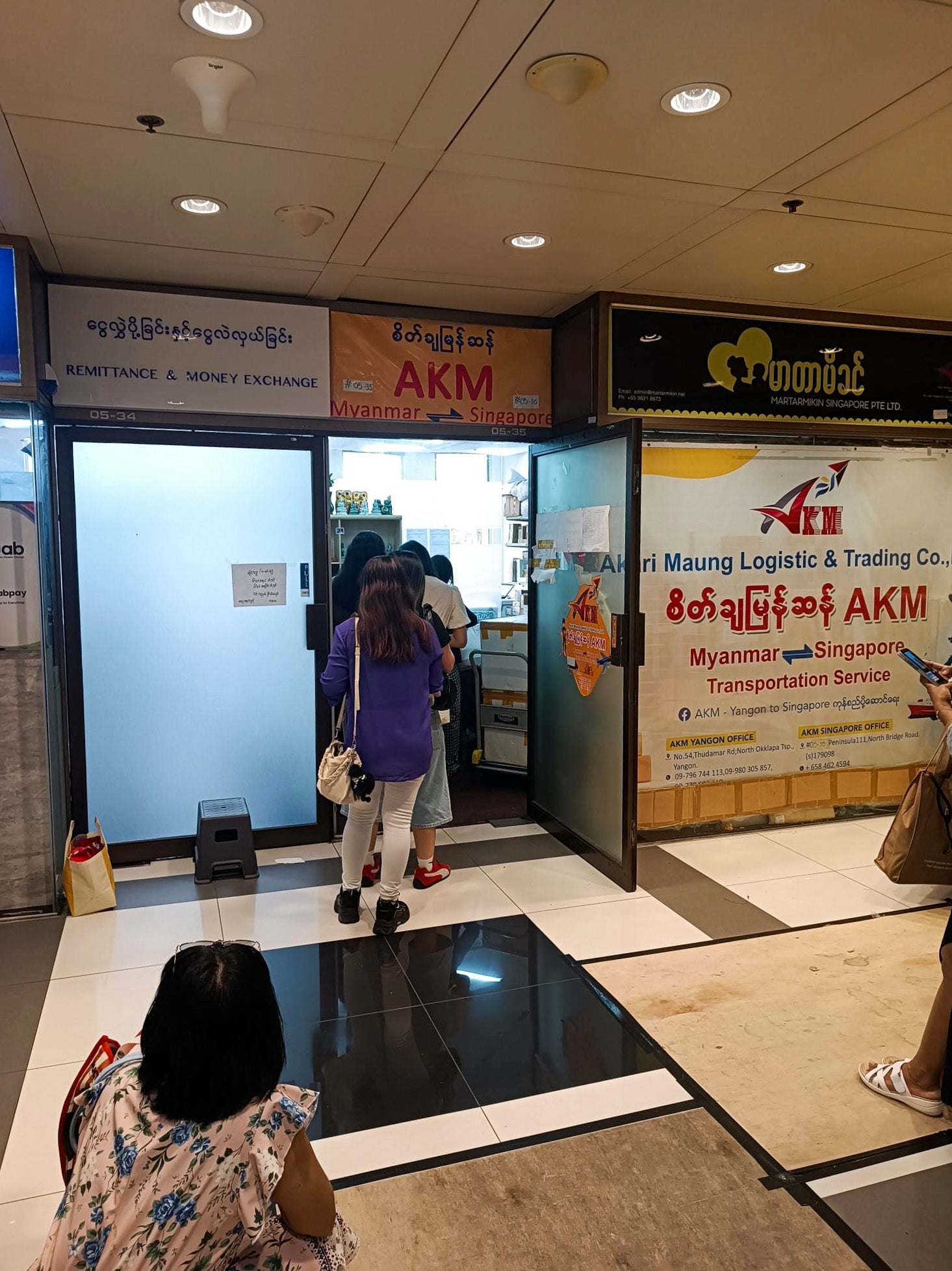
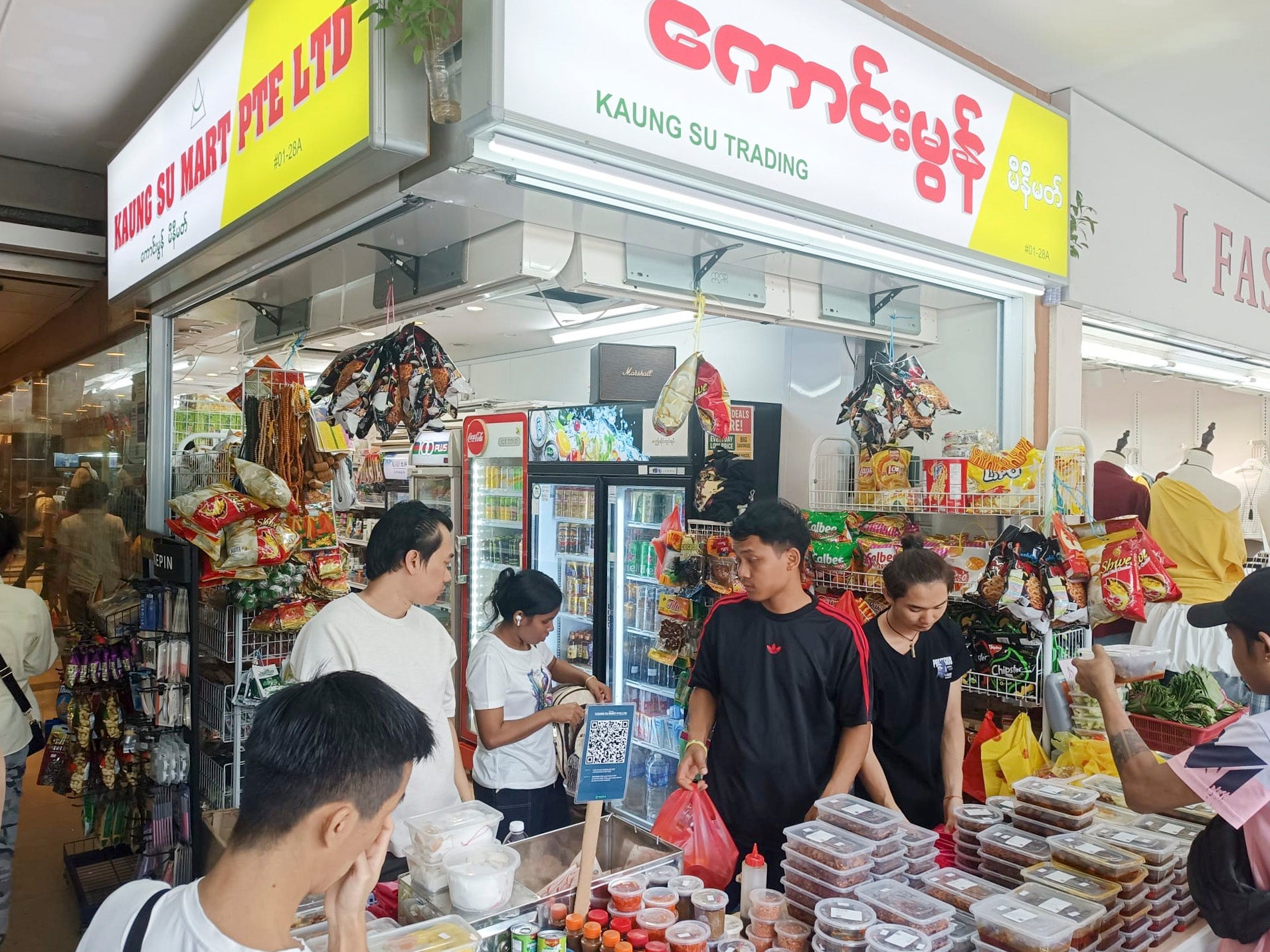
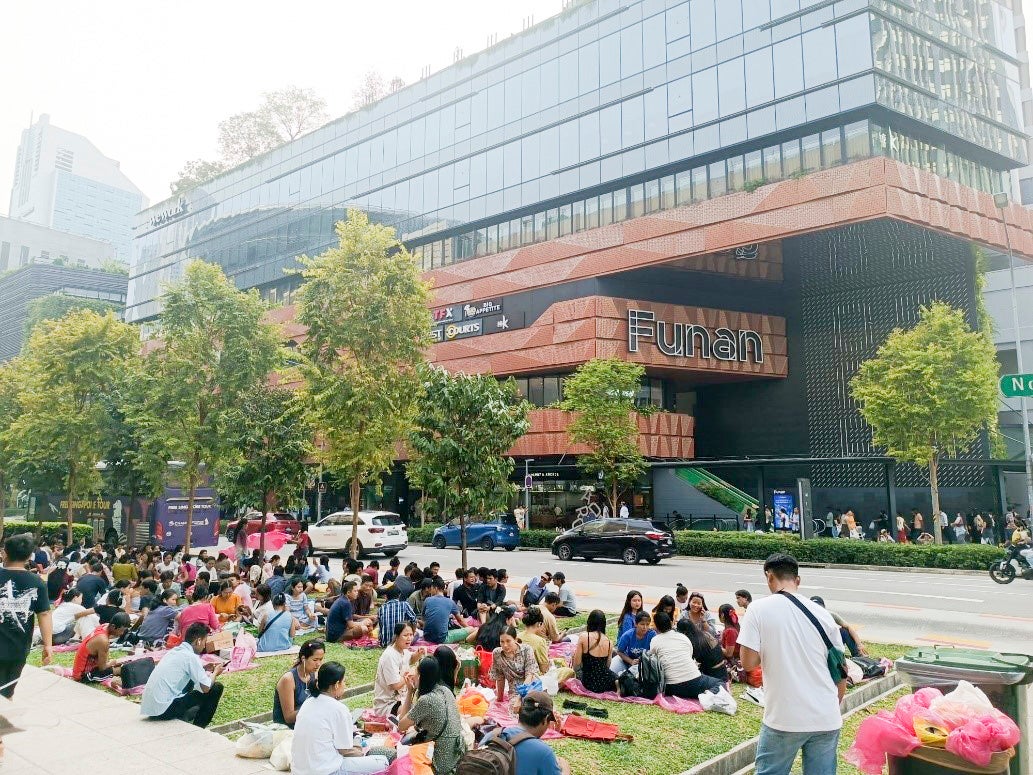
Outside Peninsula Plaza, as part of a student field trip for the CLC3308 course, we spoke to two female domestic workers sitting on the grass with a man they called their “brother”. He worked in construction in Malaysia and had travelled to Singapore to meet them. The two women had made their way from Punggol to City Hall just to spend their rest day there. They shared that the long journey was worthwhile because Peninsula Plaza offered something that could not easily be found near their estate: familiar food, friendship and a temporary sense of home that was safe and inviting.
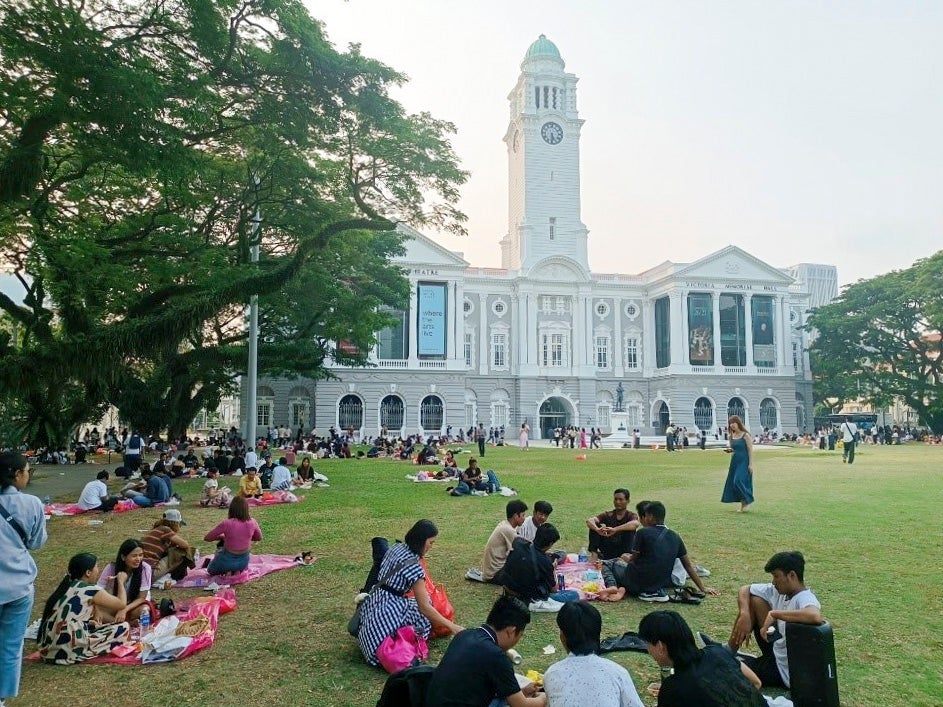
They had brought picnic mats and bought food from Peninsula Plaza to share. Despite having limited incomes, they generously offered some to us. Their hospitality challenged the assumption that a sense of community depends on wealth, formal organisations or presence of permanent spaces. Sometimes, it is created simply by gathering, conversation, eating, coupled with looking out for one another. Communities are forged by spontaneous ground up experiences and meanings, and therefore, are a work of time and shared space.
Perhaps there are many other “Little Myanmars” across Singapore that remain unnoticed. In our constant rush from one destination to another, we may not slow down enough to see the people who build our infrastructure, care for our children and elderly, and contribute quietly but steadily to Singapore’s everyday life. Their continued presence is reflective of the highly transnational landscape that Singapore has increasingly become part of, where our society consists of migrant communities that retain close ties to their country of origin but nevertheless are much more than simply “foreigners” here. It is undeniable that many play an important role in Singapore’s workforce and economic development. “Little Myanmar” reminds us that nation-building is not carried out only by citizens; it is also supported by migrant communities who have created their own spaces of belonging within our city.